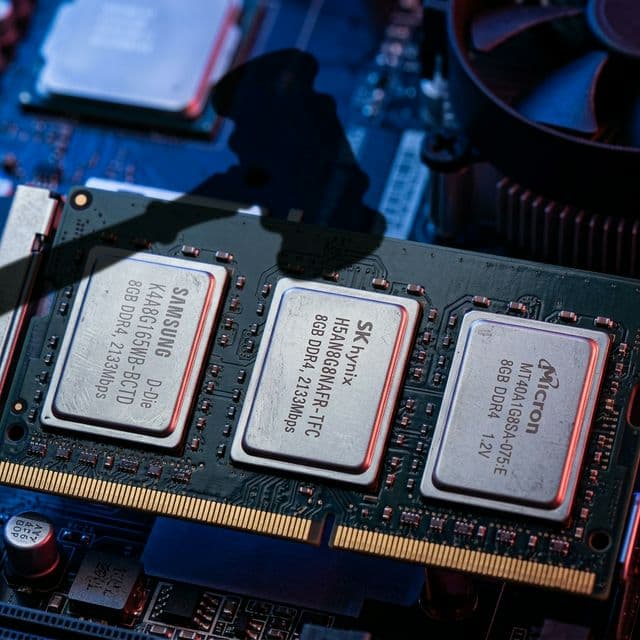
Three companies control the world's memory supply. Now they're being sued for allegedly colluding to keep prices artificially high (again, not the first time..).
Samsung, SK Hynix, and Micron got sued in California federal court on June 25th. The lawsuit represents consumers and businesses that bought products with DRAM during the recent price surge. The core accusation: these companies coordinated to cut commodity DRAM production and boost prices.
How They Allegedly Did It
According to the lawsuit, Samsung, SK Hynix, and Micron all shifted focus toward AI memory, which is called HBM. That's a legitimate business pivot. The problem is they used it as cover to slash production of older memory types like DDR3 and DDR4. Less supply. Higher prices. Prices went up roughly 700 percent over four years.
The lawsuit even cites Apple's recent price hikes on iPads and Macs as an example of the damage. Apple said soaring memory costs forced it to raise prices. Apple wouldn't have needed to raise prices if memory wasn't so expensive.
Impact on Gaming Hardware
The same happened to Valve and their new Steam Machine (as detailed in our Steam Machine Pricing & Performance breakdown).
Official Case Details (3:26-cv-06345)
The antitrust class action lawsuit, officially designated as Case No. 3:26-cv-06345 (filed as 3:26-cv-6345), is currently docketed in the United States District Court for the Northern District of California under Judge Noel Wise. The core claim asserts that Samsung, SK Hynix, and Micron engaged in price-gouging by artificially orchestrating global memory shortages. As a result, the plaintiffs are seeking financial damages and compensation.
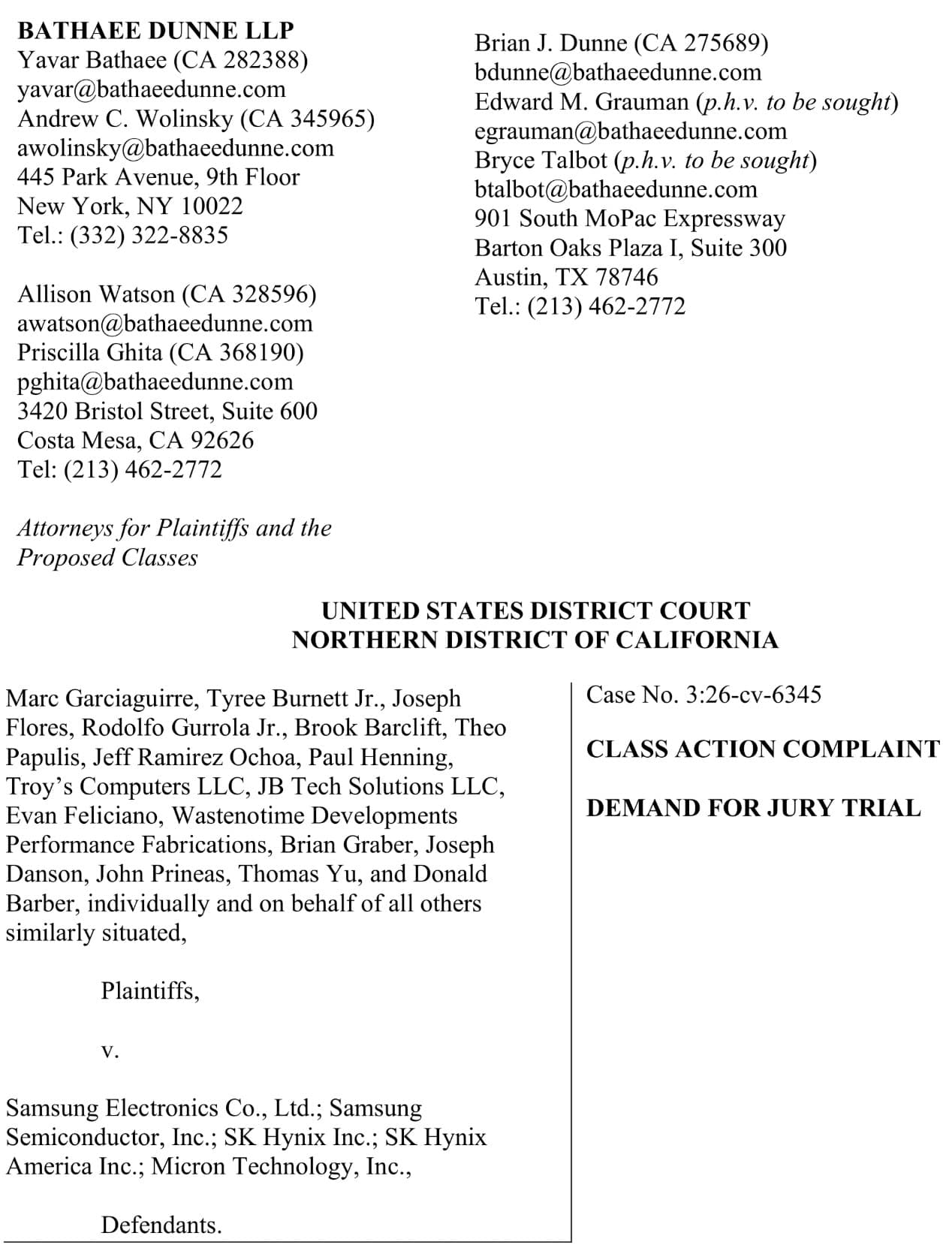
A class action complaint docket detail showing the lawyers at Bathaee Dunne LLP representing the plaintiffs against the memory manufacturing giants.
The group of filing parties seeking restitution is composed of private consumers and independent hardware businesses, including Theo Papulis, Thomas Yu, Tyree Burnett Jr., Wastenotime Developments Performance Fabrications (d/b/a WNTD Fab LLC), Thomas Barber, Brian Graber, Paul Henning, Evan Feliciano, Marc Garciaguirre, Rudolfo Gurrola Jr., Jeff Ramirez Ochoa, JB Tech Solutions LLC (d/b/a My Florida PC), John Prineas, Troy's Computers LLC, Joseph Flores, Joseph Danson, and Brook Barclift. The formal litigation was initiated on June 25th, 2026.
They've Done This Before
This isn't the first time these companies have been accused of price-fixing. Samsung and SK Hynix actually pled guilty to criminal price-fixing in the 2000s. They paid $731 million in fines. Some executives went to prison. Now they're being accused of the same thing again.
$731M
Paid in historical price-fixing fines
Criminal Penalties
Multiple DRAM executives served prison time
The pattern is there. The incentive is there. The result is the same.
What Comes Next
Nobody expects memory prices to drop anytime soon. Jefferies, a major analyst firm, is forecasting another 40 to 50 percent price increase in Q3 2026 and another 30 to 40 percent jump in Q4. Even in 2027, they expect prices to keep climbing. Prices might finally level off in 2028, but that's over a year away.
Companies like Lenovo keep warning about "elevated memory prices" becoming the new normal. That's partly because they want consumers to buy now before prices go even higher. But they're probably also right.
So RAM stays expensive. Gaming PCs stay expensive. Consoles stay expensive. This lawsuit might eventually result in some fines, but it won't change the math that made these companies decide to screw over the entire industry in the first place.
Share this article to fellow gamers