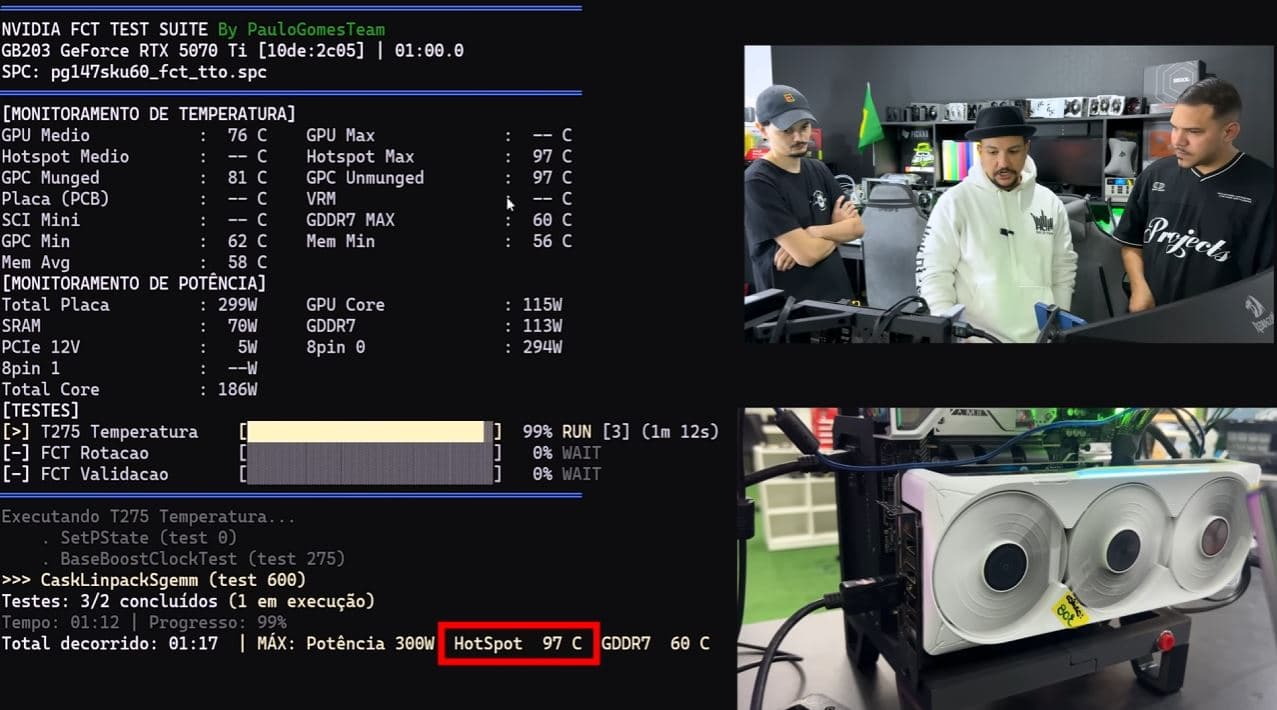
NVIDIA didn't remove the hotspot sensor from RTX 50 cards. The hardware is still there. But NVIDIA blocked software access to it. Now people can't see when their GPUs are actually overheating. A Brazilian repair channel figured out how to unlock the readings, and the results show widespread thermal problems NVIDIA was hiding.
Here's what happened. The average GPU temperature on RTX 50 cards looks fine — 70 to 80 degrees Celsius. But the hotspot temperature, which shows the actual hottest point on the chip, was hitting 107 degrees. The GPU started throttling itself to protect from damage, even though the average temperature said everything was okay.
70–80°C
Average GPU temperature (what you can see)
Looks fine
107°C
Hotspot temperature (blocked by NVIDIA)
Actually throttling
Replace the thermal paste, and the hotspot drops to 100 degrees. Performance jumps back to normal.
Why This Matters
Before RTX 50, you could always see the hotspot temperature in monitoring tools like GPU-Z, HWiNFO, and MSI Afterburner. It was useful for catching problems. A bad cooler. Thermal paste applied wrong. A misaligned waterblock. The hotspot told you immediately if something wasn't making proper contact with the chip.
GPU-Z
No longer shows hotspot on RTX 50
HWiNFO
Hotspot data inaccessible from driver
MSI Afterburner
Readings blocked at driver level
NVIDIA didn't remove the hotspot sensor from the GPU hardware. It's still soldered to the die. But NVIDIA removed it from the software readout. Monitoring tools can't access it anymore. Users only see average temperature, which is much lower and doesn't tell you anything about problem areas on the chip.
The Problem
A repair channel in Brazil started seeing RTX 50 cards with the same issue. Users complained about lower performance. Fans running at high speed. But average temperatures looked normal. Once they unlocked hotspot readings with mods, they saw the real problem. Every single card had the same thermal contact issues.
Replace the thermal paste, temperature drops, performance returns. Problem solved.
Hidden by Design
Users never knew there was a problem because NVIDIA blocked access to the diagnostic tool they needed. A throttling GPU with a normal-looking average temperature is nearly impossible to diagnose without hotspot readings.
Why NVIDIA Did This
Nobody knows for sure. Maybe NVIDIA figured average temperature was enough. Maybe they wanted to avoid complaints about high hotspot readings. Maybe they just simplified monitoring and didn't think it through.
What's weird is that NVIDIA's data center GPUs come with robust diagnostic tools. They track everything, including hotspot temperatures and airflow issues. But consumer gaming GPUs get the information blocked out.
Data Center GPUs
Full thermal telemetry. Hotspot readings. Airflow tracking. Every diagnostic a technician needs. NVIDIA includes all of it.
Consumer Gaming GPUs (RTX 50)
Average temperature only. Hotspot sensor blackout. Users are flying blind when something goes wrong.
The Fix
The sensor is still there. The data still exists. NVIDIA could unlock hotspot readings in monitoring tools with a driver update tomorrow if they wanted to.
Until that happens, RTX 50 owners with thermal problems have no way to diagnose them without mods. And thermal problems on these cards seem common enough that this should have been addressed already.
If You Own An RTX 50 Card
If your card's fans are spinning hard but average temps look fine, you may have thermal contact issues that aren't visible with standard monitoring tools. Replacing thermal paste is the documented fix. Watch performance and fan noise as your primary indicators until NVIDIA restores hotspot access.
Share this article to fellow gamers