NVIDIA is back on top in Germany for GPU sales in June 2026. The RTX 50 series shipped nearly 3,495 units compared to AMD's 3,240 units. But here's the catch: AMD's RX 9070 XT alone sold more units than any single NVIDIA card.
NVIDIA won on revenue, not popularity. The RTX 50 series has a much higher average price of around 1,100 Euros per card. AMD's cards average 519 Euros. That's more than double the price difference. So NVIDIA brought in 66 percent of revenue while AMD only got 32 percent, even though the unit count was nearly identical.
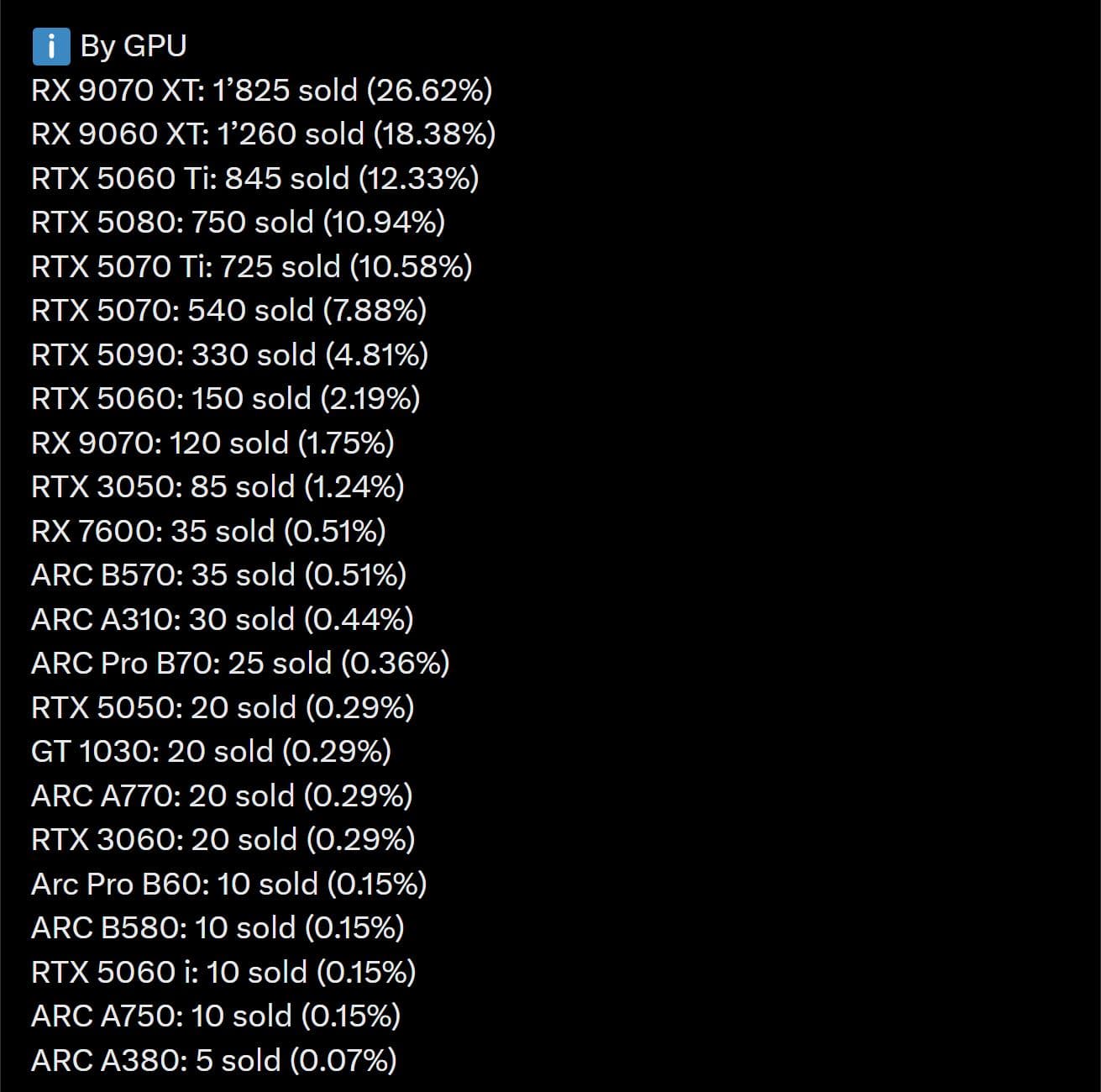
GPU unit sales by model — Mindfactory Germany, June 2026
3,495
NVIDIA RTX 50 units sold
3,240
AMD RX 9000 units sold
66%
NVIDIA revenue share despite near-equal units
The NVIDIA Winners
The RTX 5060 Ti was the most popular NVIDIA card with 845 units sold. The RTX 5080 came next at 750 units, pushing the average price way up since it costs over 1,200 Euros. The RTX 5070 Ti rounded out the top three.
People are still avoiding the 8GB RTX 5060 because the memory is too limited. Nobody wants that card no matter how cheap it is.
NVIDIA Top Sellers — Germany, June 2026
AMD's Dominance
AMD's RX 9070 XT sold nearly 1,825 units. That's more than any NVIDIA card. The RX 9060 XT came in second for AMD with 1,260 units. Together these two cards represent 45 percent of all AMD sales. The RX 9070 XT basically prints money for AMD because people actually want it.
This is the real story. NVIDIA sold more total cards because it has more SKUs and a wider range. But when you look at individual models, AMD's cards are what people actually prefer. The RX 9070 XT outsells the RTX 5080 by more than 1,000 units. The RTX 5080 costs twice as much.
AMD Top Sellers — Germany, June 2026
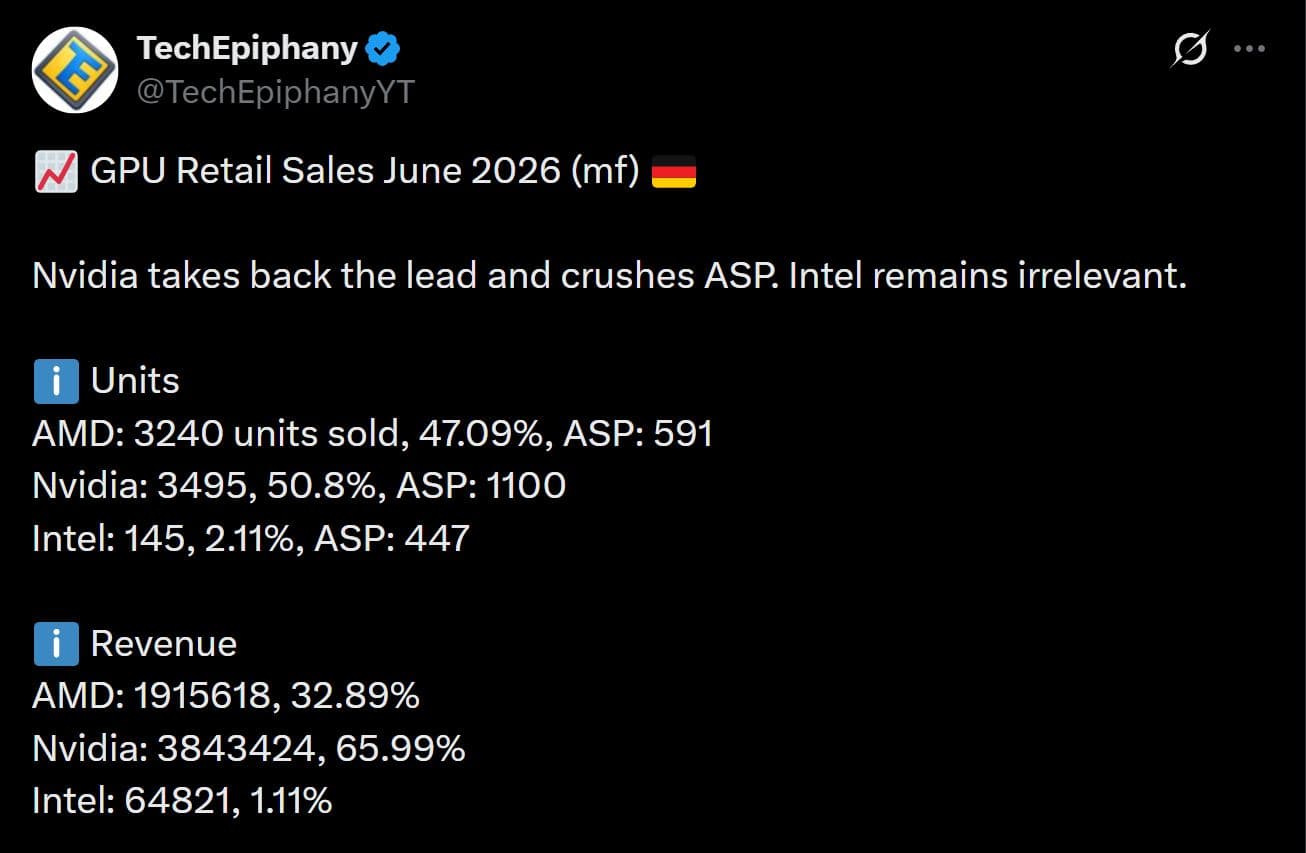
GPU revenue & market share — Mindfactory Germany, June 2026
Head-to-Head: Best Single SKU
RX 9070 XT
~1,825 units
~€519 avg
RTX 5080
~750 units
€1,200+
AMD's most popular card outsells NVIDIA's second-best by over 1,000 units — at half the price.
What This Means
NVIDIA won the sales battle on paper. But AMD won on preference. Germans are buying NVIDIA cards because they exist and NVIDIA has marketing. They're buying AMD cards because they actually want them and they cost less.
This won't last if NVIDIA can sort out pricing or if AMD runs into stock issues. For now though, the gap is obvious. AMD makes what people want to buy. NVIDIA makes what people buy when they need something.
When the single most popular GPU in a market outsells the competition's best card by 2.4x, that's not a close race. That's a statement.
Share this article to fellow gamers