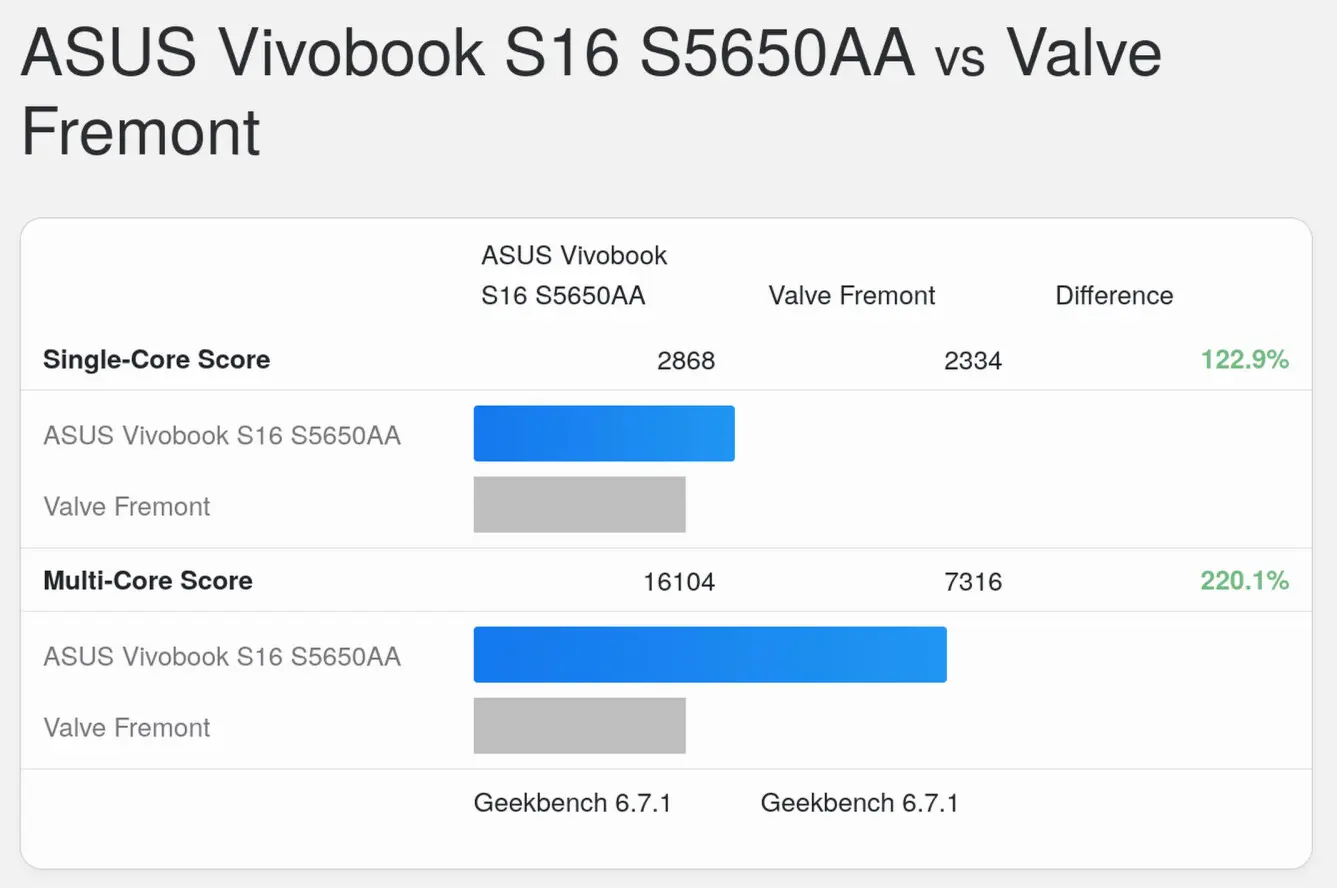
Leaked Geekbench 6 listing for "Valve Fremont" — Valve has not officially announced this hardware.
Valve's been awfully quiet about its hardware plans, but a surprise Geekbench 6 listing just dropped some serious hints that a Steam Machine is actually happening. The mysterious "Valve Fremont" entry popped up online, and gaming forums are losing their minds trying to decode what it all means.
Unlike the handheld-focused Steam Deck, this device appears aimed at the living room—a compact gaming PC that sits between a traditional console and a full desktop rig. The benchmark doesn't tell the whole story, but combined with circulating rumors, it paints a picture of hardware that could deliver solid 1080p and 1440p gaming without the friction of a Windows setup.
Disclaimer
The following information is based on an unverified Geekbench listing and industry rumors. Valve has not confirmed the existence of "Fremont" or any new Steam Machine hardware, and final products may differ significantly from these early reports.
The Numbers
So what are we working with? The benchmark shows a single-core score of 2,334 and a multicore score of 7,316. Yeah, that's not setting any desktop CPU records—but hold up, that's not really the point here.
Geekbench is a synthetic CPU test, and console-class hardware is rarely optimized for these workloads. What matters is whether the chip has enough headroom to feed a discrete GPU without becoming a bottleneck in real games. A six-core Zen 4 part should handle that role comfortably at 1080p and 1440p, especially with SteamOS doing the heavy lifting on driver and scheduler optimization.
| Device | Single-Core | Multi-Core | CPU | GPU | VRAM |
|---|---|---|---|---|---|
| Valve Fremont (Leak)Leak | 2,334 | 7,316 | 6 (Zen 4) | RDNA 3 / Navi 33 | 8GB |
| Intel Core Ultra 7 358H | ~2,800+ | 16,000+ | 16 (Hybrid) | Integrated | Shared |
| Steam Deck (OLED) | ~1,100 | ~4,200 | 4 (Zen 2) | RDNA 2 | Shared |
What's Under the Hood?
The rumor mill says Valve's rocking a six-core AMD Zen 4 processor with an RDNA 3 GPU (Navi 33 architecture) and 8GB of video memory. Think of it as the sweet spot between a compact gaming PC and a console. It's not trying to be a top-tier gaming rig, but it's not underpowered either.
To put the CPU in perspective, Intel's Core Ultra 7 358H absolutely crushes it with multicore scores over 16,000. But here's the thing—when you're gaming, the CPU matters way less than the GPU. That's where the real magic happens. A Zen 4 six-core in a thermally constrained box is a sensible choice: modern enough for Proton and FSR, efficient enough to keep fan noise reasonable in a living room.
AMD Zen 4 (6-Core)
A current-generation CPU architecture that balances single-thread performance with power efficiency. Six cores is plenty for gaming and background tasks like Discord or streaming overlays without eating into GPU power budget.
RDNA 3 / Navi 33 + 8GB VRAM
Navi 33 is a compact die designed for mainstream discrete GPUs. If the rumors align with something close to an RX 7600, you're looking at a GPU class that handles 1080p max settings and 1440p with sensible tuning.
GPU: The Real Story
This is where things get interesting. The Fremont listing hasn't surfaced a dedicated GPU benchmark yet, but if the rumors are accurate and it's packing something close to an RX 7600, you're looking at solid 1080p and 1440p performance. That's way better than whatever integrated graphics your laptop has.
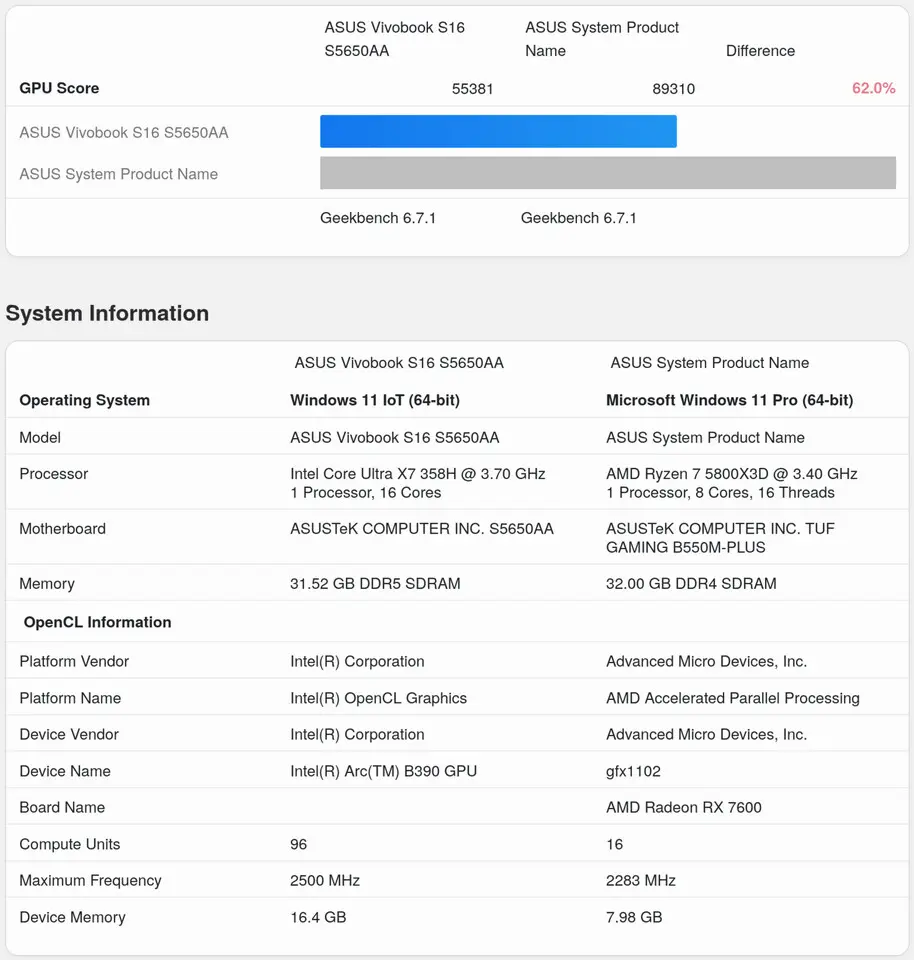
Valve's apparently aiming for upscaled 4K at 60fps with ray tracing and FSR (FidelityFX Super Resolution) thrown in. Will it actually deliver? That depends on optimization, cooling, and whether developers actually give a damn. But it's definitely ambitious. FSR 3 frame generation on RDNA 3 could be the secret sauce that makes 4K targets feel achievable without brute-forcing native resolution.
From an FPS per Dollar perspective, the GPU tier matters more than any Geekbench score. An RX 7600-class GPU at a console price point would be competitive against budget gaming laptops and entry-level prebuilts—especially when you factor in zero Windows licensing cost and a library that travels with your Steam account.
The Timeline Clue
Here's what's getting people hyped: when benchmarks like this leak, it usually means the hardware is getting close to launch. We're talking validation phases, review units, final testing—the good stuff. This isn't some early concept; someone's hardware is already out there being tested.
Geekbench listings from unreleased hardware typically surface weeks to months before an official announcement. Valve's track record with the Steam Deck suggests they prefer to control the narrative tightly, so a leak this early could mean the launch window is closer than most analysts assumed.
The Skeptics vs. The Believers
Yeah, some people think the specs sound dated compared to what'll be out around the same time. Fair point. An 8GB VRAM buffer and a mid-range RDNA 3 chip won't turn heads on a spec sheet next to a fully loaded gaming PC. But Valve's got advantages that spec sheets don't capture: tight SteamOS integration, a massive existing game library, and basically zero friction switching from regular PC gaming. That ecosystem stuff actually matters.
The Steam Deck proved that optimization and software polish can punch above raw TFLOPS. Proton compatibility has improved dramatically, and Valve knows exactly which games in its catalog run well on Linux. A living-room box that boots straight into your Steam library—with controller-first UI and predictable performance—is a different product category than a DIY mini PC, even if the silicon looks similar on paper.
The Believer Case
SteamOS integration, Proton compatibility, and a unified Steam ecosystem make this more than the sum of its parts. A $500–$600 box that plays 90% of your library out of the box is a compelling living-room play.
The Skeptic Case
8GB VRAM is already tight for modern AAA titles at high settings. Without a killer price, a mini PC with Windows and an RX 7600 might offer more flexibility for power users who want full desktop freedom.
The Real Talk
Honestly, we still don't know the price, real performance in actual games, or when this thing's actually dropping. But that leaked benchmark? It's looking pretty legit. Valve's next hardware move is coming. We just gotta wait for the official word and release.
Explore by Budget
Explore by Resolution
Share this article to fellow gamers